
5 Tips for Packing Lightweight Clothing on the Road
Did you know that carrying more than 10% of your body weight in your backpack can affect your performance and comfort on the Camino de Santiago ? Here are 5 key tips to reduce weight and improve your experience:
- Use quick-drying fabrics like polyester or merino wool. They're lightweight, breathable, and easy to wash.
- Wear convertible pants : practical for temperature changes, they protect against the sun and are easy to dry.
- Pack only 2-3 changes of underwear and socks. Opt for technical materials that minimize odors and dry quickly.
- Choose thin, compressible layers to keep you warm without adding unnecessary weight.
- Organize everything in waterproof bags to protect your clothes from the rain and keep your backpack tidy.
With these tips, you can keep your backpack weight between 6 and 9 kg, ensuring comfort during long days of hiking. Less weight, more enjoyment!
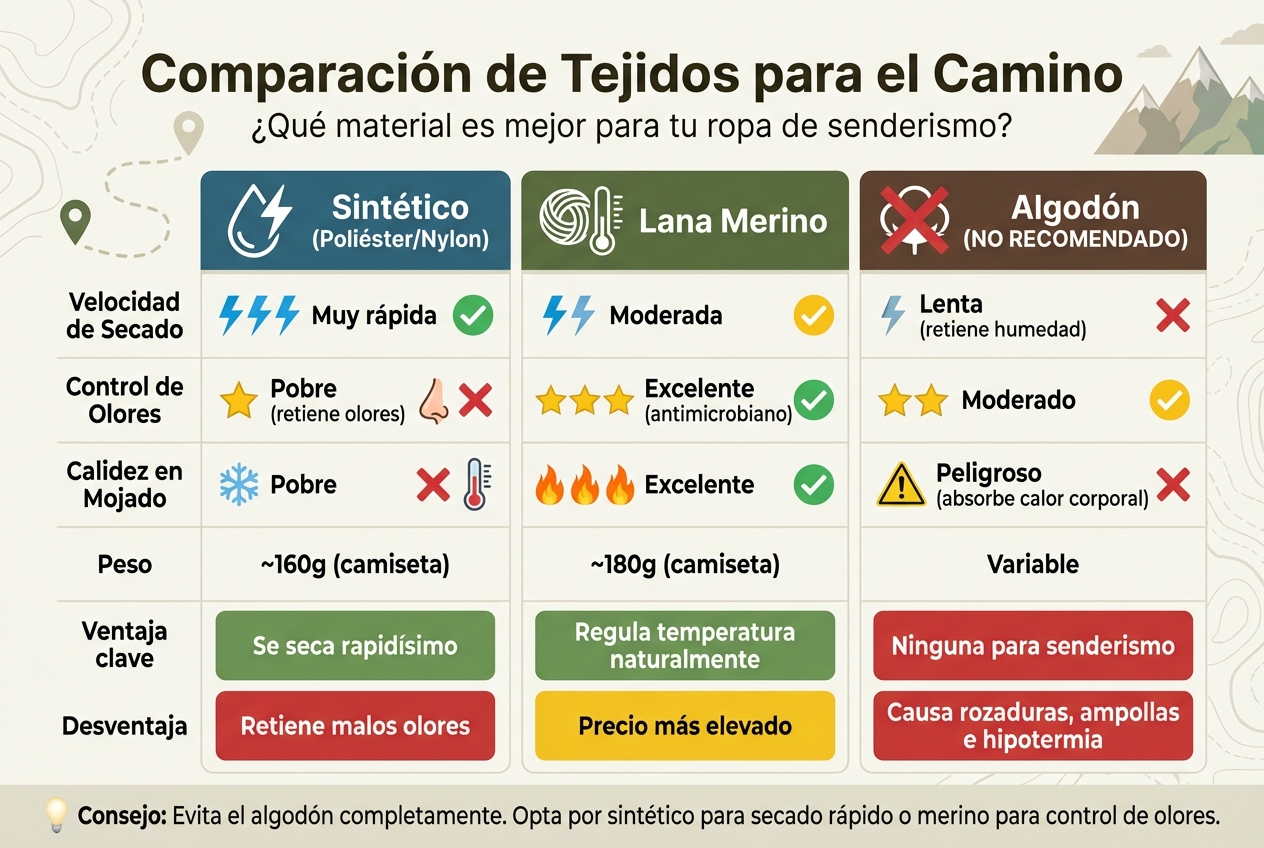
Comparison of technical fabrics for the Camino de Santiago: synthetic vs merino wool vs cotton
1. It features quick-drying technical fabrics.
Lightweight and Compressible Materials
Synthetic fabrics , such as polyester and nylon, are ideal for wicking moisture away from the skin and allowing it to evaporate quickly. If you wash your clothes every night and they don't dry completely, you can hang them outside your backpack while you continue hiking.
Another option to consider is merino wool , although it is more expensive. This material naturally regulates body temperature and retains heat even when damp. For example, a merino wool t-shirt weighs approximately 180g, while a synthetic one weighs around 160g. Both options are lightweight and perfect for keeping your backpack's weight between 6 and 9 kg.
Breathable and quick-drying fabrics
Avoiding cotton is essential, as this material retains moisture, which can lead to chafing, blisters, and even hypothermia. As Heather Eldridge of CleverHiker explains:
"There's no such thing as bad weather, only bad equipment. As hikers, we expect a lot from our clothing. It has to insulate us from the cold, allow for good perspiration, dry quickly, and protect us from everything."
Here's a quick comparison of the most common materials:
| Feature | Synthetic (Polyester/Nylon) | Merino wool | Cotton |
|---|---|---|---|
| Drying Speed | Very fast | Moderate | Slow (retains moisture) |
| Odor Control | Poor (retains odors) | Excellent (antimicrobial) | Moderate |
| Warmth in Wet | Poor | Excellent | Dangerous (absorbs body heat) |
Choosing fabrics that dry quickly and are breathable not only improves your comfort, but also helps you adapt better to the weather.
Versatility for Climate Change
To cope with temperature fluctuations, use a layering system with technical fabrics. This will allow you to easily adapt to cool mornings and warm afternoons. Instead of wearing one thick garment, opt for thin layers: a technical base layer, a lightweight fleece (approximately 235g), and a waterproof jacket. In September, when temperatures can reach 25°C, make sure your layers are breathable enough.
Another advantage of merino wool is its resistance to odors. As MargLav mentions in the Camino forum:
"Merino wool is very tolerant from an odor perspective; running shirts not so much."
This means that with merino clothing you can only wear 2-3 outfits and wash them less frequently, while synthetic garments usually require daily washing.
sbb-itb-2b14d48
2. Wear one or two convertible pants
Versatility for Climate Change
If you're following the layering approach for the Camino, convertible pants are a practical and functional solution. With just a few zips, you can transform long pants into shorts, easily adapting to changing temperatures. When worn as long pants, they protect your legs from sun exposure, insects, ticks, and plants that can irritate your skin. On the other hand, when converted into shorts, you get better ventilation, essential in the hottest moments. All of this is thanks to the high-performance fabrics they're made from.
Breathable and quick-drying fabrics
Most of these pants are made from a blend of nylon and elastane, materials known for their sweat-wicking and quick-drying properties, allowing you to wash them at the end of each day and have them ready for the next. Many technical models also include UPF 50+ sun protection, a key feature for shielding yourself from UV rays during long hikes.
"I usually use them for hiking and backpacking because of their versatility."
As for weight, they tend to be quite light, ranging from 230 to 480 g. Some popular examples are the Marmot Arch Rock (255 g) and the PrAna Stretch Zion (385 g).
Efficient Organization and Space Saving
Convertible pants also help you better organize your backpack, as they serve two purposes in one garment. This allows you to reduce the amount of clothing you carry and keep the total weight of your pack within the recommended range of 6 to 9 kg. Furthermore, some models include vertical zippers at the bottom of the legs, making it easy to remove them without having to take off your boots. A small improvement that makes a big difference in comfort on the Camino.
3. Only wear 2-3 sets of underwear and socks
Lightweight and Compact Materials
To reduce the weight of your backpack on the Camino, it's ideal to carry only 2-3 sets of underwear and socks. Opt for technical fibers instead of cotton, as materials like merino wool or synthetics (polyester/nylon) are lighter and take up less space. With these fabrics, you can rotate the sets (wear one, change one, and wash one), taking advantage of the washing and drying facilities offered by most hostels. This approach not only lightens your load but also improves your comfort along the way.
Quick-drying and breathable fabrics
Cotton isn't your best friend: it retains moisture and promotes chafing. On the other hand, merino wool and synthetic fabrics are ideal because they wick away sweat quickly, keeping you dry while you walk. Furthermore, merino wool has antimicrobial properties that help delay the onset of unpleasant odors.
"Merino wool clothing is very popular among pilgrims: it dries quickly and doesn't smell bad" - Maria, Spanish for Camino
Keeping your feet dry is essential to prevent blisters. If you're prone to them, a good strategy is to wear a thin silk or synthetic sock as a base layer, followed by a thicker technical sock. This reduces friction and improves protection.
Efficient Organization and Space Saving
Besides being practical for drying, these materials allow for better organization of your gear. Carrying only 2-3 sets of clothing helps keep your backpack weight within the recommended limit of 10% of your body weight. To optimize space, roll underwear and socks instead of folding them. Use mesh bags or organizing cubes to keep everything tidy and accessible. Safety pins are also useful for hanging wet socks and taking advantage of the breeze and sun during the Camino.
4. Choose thin layers that compress easily
Lightweight and Compact Materials
To optimize your packing for the Camino, opt for thin layers that compress easily. The three-layer system is key to maintaining body temperature: a base layer to manage moisture, a mid-layer for warmth, and an outer layer to protect you from wind and rain. Instead of a heavy jacket, choose garments made of technical materials such as ultralight puffer jackets or thin fleece. These offer a better balance between warmth and weight than a wool sweater and also take up much less space in your backpack.
Breathable and quick-drying fabrics
Polyester is ideal because it barely absorbs water (only 1% of its weight), keeping you dry. On the other hand, ultralight merino wool is a great option for a base layer, as it regulates temperature and prevents odors, even after several days of wear.
Versatility for Variable Climate
Thin layers allow you to easily adapt to temperature changes between cold mornings and warm evenings. For example, start the day with a lightweight mid-layer (such as a fleece or a thin puffer ) over your base layer, and pack it away in your backpack when the temperature rises. This flexibility is especially useful in mountainous areas, where temperatures can vary between -4°C and 4°C. Maintaining a modular layering system also makes organizing your pack easier.
Efficient Organization and Space Saving
Roll thin layers tightly and store them in quart- or gallon-sized waterproof Ziploc-type bags. These bags are lighter than traditional packing cubes, compress clothing efficiently, and protect it from moisture. This approach, along with using technical materials and convertible pants, ensures comfort and maximizes space in your pack. Remember that the total weight of your pack should not exceed 10% of your body weight, ideally between 6 kg and 9 kg, excluding water.
5. Organize Clothes in Waterproof Bags
Protection Against Heavy Rain
If you're walking the Camino de Santiago, keeping your backpack light and well-organized is key. One simple way to do this is by using waterproof bags for your clothes. In northern Spain, heavy rain is common year-round. While backpack covers are helpful, they don't always withstand the heaviest downpours. That's why storing your belongings in waterproof bags inside your backpack ensures everything stays dry, even if the outside of the backpack gets soaked. As Frank, owner of Hike for Purpose , points out:
"Documents and anything that needs waterproofing can be easily protected with a Ziploc bag."
This simple tip can make all the difference in keeping your belongings protected, regardless of the weather conditions.
Efficient Internal Organization
A well-organized backpack saves time and prevents frustration. Divide your belongings into categories and use different bags for each group: clean clothes, food, electronics, and toiletries. This not only protects your things but also makes it easier to find what you need without unpacking the entire backpack. Roll-top bags are ideal for clothing, while clear Ziploc bags are perfect for important documents like your Pilgrim Passport, ID, or cash. Íñigo Martín, author of *A Lightweight Backpack *, explains it this way:
"This whole system of bags is very practical both for protecting your belongings and for keeping everything well organized and finding what you need easily. Otherwise, the backpack gets messed up right away."
This system not only saves you time, but also prevents chaos inside your backpack.
Humidity Management
Another benefit of waterproof bags is that they allow you to separate wet or dirty clothes from clean ones. However, avoid storing damp clothes in completely sealed bags for extended periods, as this can lead to unpleasant odors. For garments that need ventilation, mesh bags are an excellent option, as they facilitate drying. A helpful trick is to use different colored bags to quickly identify their contents without having to open them. Such a simple system can be a real lifesaver on the Camino!
Pack YOUR PERFECT backpack for the Camino de Santiago - What to bring without unnecessary weight?
Conclusion
Traveling light is essential to enjoying the Camino de Santiago without injury or exhaustion. The Jacobean Foundation points out that carrying too much weight is one of the most common mistakes among pilgrims, as it can cause discomfort in the back, ankles, and knees. According to the 10% rule, the ideal weight for your backpack should be between 6 and 9 kg.
The five tips mentioned—using quick-drying technical fabrics, opting for convertible trousers, packing only two or three changes of clothes, choosing thin layers, and using waterproof bags—help reduce weight without compromising functionality. Furthermore, washing your clothes at hostels allows you to carry only what you need, while good organization protects your belongings and saves you time, especially given the frequent rain in northern Spain.
The Camino passes through numerous towns where you can stock up on supplies, so avoid packing things "just in case." Simplicity is the essence of a true pilgrim to Santiago. With this strategy, your backpack will be light and practical.
If you're looking for quality technical gear, visit Peregrin Tuk . There you'll find Patagonia products ideal for the Camino, as well as route guides and helpful tips. Buen Camino!
FAQs
How do I calculate the ideal weight for my backpack?
The ideal weight for your backpack on the Camino de Santiago should be around 10% of your body weight . This is essential to avoid overloading your backpack and make the walk much more manageable. The key is to carry only the essentials , which will allow you to keep your backpack light and comfortable throughout the entire journey.
How do I wash and dry my clothes every day on the Camino?
On the Camino de Santiago, keeping your clothes clean and dry is easier than you might think. Many hostels have washing and drying facilities, and you'll also find local laundromats in the villages along the route.
If you prefer to do it yourself, bring a small bottle of laundry detergent. It's also helpful to have a lightweight clothesline to hang your clothes in a well-ventilated area. If you need your clothes to dry faster, a handy trick is to wrap them in a dry towel and press firmly to absorb the excess water.
Many hostels also have designated areas for drying clothes, where you can take advantage of the sun and wind for more natural drying. With these tips, keeping your clothes ready for the next stage will be a breeze!
What should I do if my clothes get wet in heavy rain?
If your clothes get wet during the Camino de Santiago, the first thing to do is find a sheltered spot where you can dry them to avoid further inconvenience. Store wet clothes in waterproof bags to prevent them from soaking the rest of your belongings. Also, prioritize wearing quick-drying technical clothing, as it will be much more practical in these situations.
A good raincoat can make all the difference, as it will significantly reduce the amount of clothing that gets wet. If the rain is heavy and persistent, consider taking shelter in a nearby hostel. There you can rest, regroup, and, most importantly, dry your belongings before continuing your journey.